
Explore The Beauty Of Dambulla
Dambulla is one of Sri Lanka’s most remarkable cultural destinations, famed for its ancient cave temples, golden Buddha statues, and panoramic views of the surrounding plains. Recognized globally for its historical and religious significance, Dambulla offers a powerful blend of spirituality, art, and timeless heritage at the heart of the island.
Basic Information
Located in Sri Lanka’s Central Province, Dambulla sits within the country’s renowned Cultural Triangle, close to iconic cities such as Sigiriya, Polonnaruwa, and Anuradhapura. For centuries, it has served as a sacred sanctuary for Buddhist monks and a place of refuge for kings. Today, it stands as one of the best-preserved religious complexes in South Asia and a must-visit destination for travelers seeking cultural depth and spiritual tranquility.
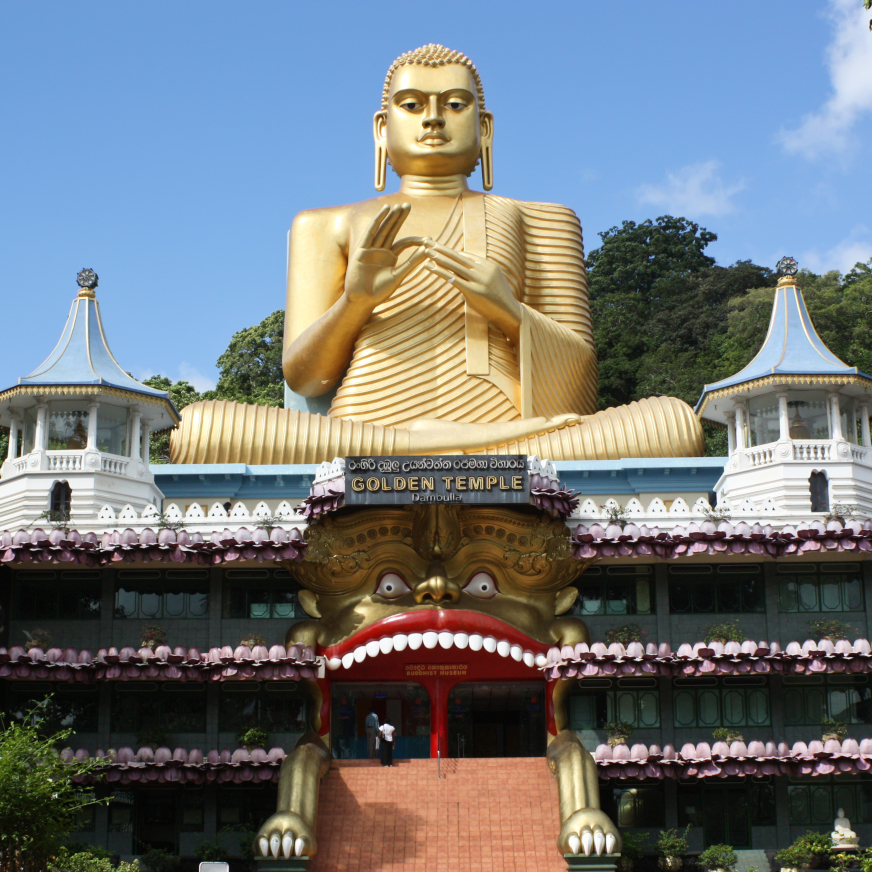
At the center of Dambulla’s fame is the world-renowned Dambulla Cave Temple, officially known as the Golden Temple of Dambulla, a UNESCO World Heritage Site that continues to inspire awe more than two thousand years after its creation.
A Sanctuary Carved In Stone
The origins of Dambulla date back to the 1st century BCE, during the reign of King Valagamba. After being forced into exile, the king found shelter in these caves. Upon reclaiming his throne, he transformed them into a magnificent rock temple as an act of gratitude. Over time, successive kings added to the complex, resulting in a layered history carved directly into rock.
Unlike freestanding temples, Dambulla’s sacred spaces are entirely integrated into a massive granite outcrop. The result is a harmonious fusion of nature and devotion, where stone ceilings, cave walls, and painted surfaces come together to create an atmosphere of deep reverence and calm.
The Five Sacred Caves
The Dambulla Cave Temple complex consists of five main caves, each with its own identity, artistic style, and religious importance.
- Devaraja Lena (Cave of the Divine King) features a colossal reclining Buddha statue carved from the rock itself, stretching over 14 meters in length.
- Maharaja Lena (Cave of the Great Kings) is the largest and most impressive, housing dozens of Buddha statues and vibrant ceiling paintings depicting scenes from the Buddha’s life.
- Maha Alut Vihara showcases later Kandyan-era art, reflecting the evolution of Sri Lankan Buddhist painting.
- Pachima Vihara and Devana Alut Vihara add further depth with serene statues and symbolic imagery.
Altogether, the complex contains over 150 Buddha statues and approximately 2,000 square meters of ancient murals, making it one of the most extensive collections of Buddhist cave art in the world.
Art, Symbolism, & Spiritual Atmosphere
What truly sets Dambulla apart is the immersive spiritual environment. The cave ceilings are covered edge-to-edge with paintings in earthy reds, golds, and blues, illustrating Jataka tales, historical events, and symbolic motifs. These artworks are not merely decorative; they are visual teachings designed to guide devotees toward Buddhist values and philosophy.
Even today, monks chant within the caves, oil lamps flicker gently, and pilgrims arrive barefoot, dressed in white, carrying lotus flowers. The atmosphere remains profoundly spiritual, offering visitors a rare chance to experience living history rather than silent ruins.
The Golden Temple & Modern Dambulla
At the base of the rock lies the Golden Temple, marked by an imposing golden Buddha statue that has become a modern landmark of Dambulla. This area includes a museum and monastic buildings, bridging ancient heritage with contemporary religious life.
Beyond the temple complex, Dambulla functions as a vibrant commercial town and agricultural hub, famous for its wholesale produce market—one of the largest in Sri Lanka. This contrast between sacred calm above and everyday life below gives Dambulla a unique character rarely found elsewhere.
Views, Nature, & Exploration
The climb to the cave temples involves a short but scenic ascent. From the summit, visitors are rewarded with sweeping views of forests, reservoirs, and distant mountains. Early morning and late afternoon visits are especially rewarding, offering cooler temperatures and dramatic light over the landscape.
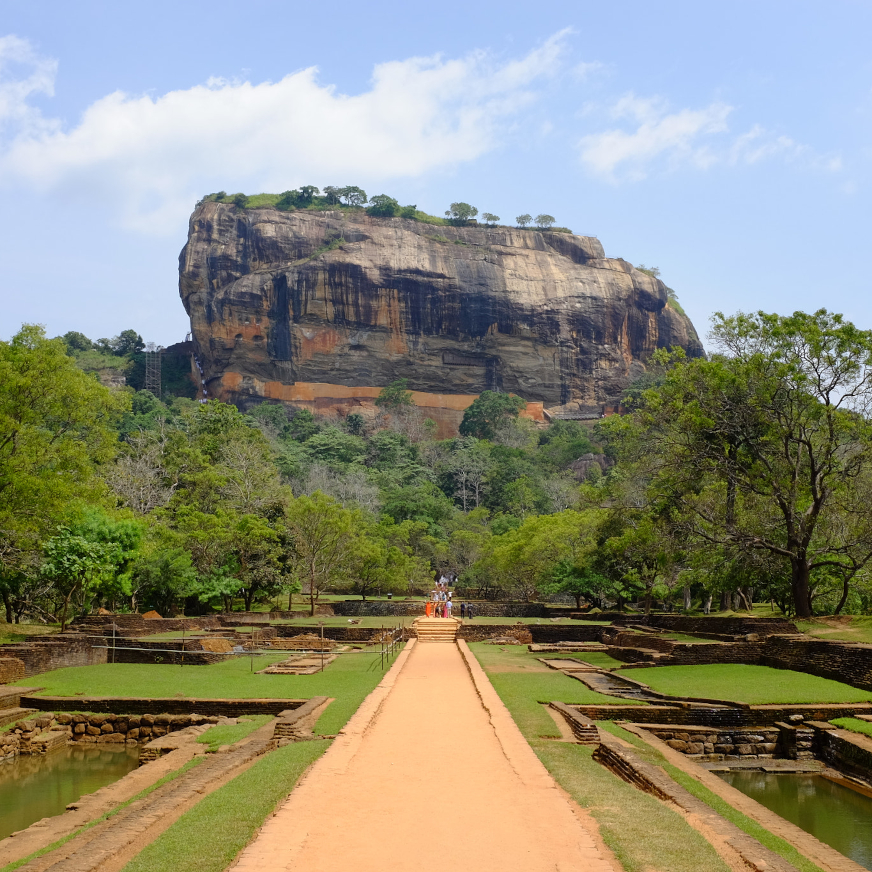
Dambulla also serves as an excellent base for exploring nearby attractions, including Sigiriya Rock Fortress, Minneriya National Park, and ancient irrigation tanks that reflect the region’s long-standing relationship with nature.
Experience Dambulla With Ciao Lanka Tours
At Ciao Lanka Tours, we present Dambulla not just as a destination, but as an experience that connects history, faith, and culture. Our guided tours provide clear historical context, insights into Buddhist art and symbolism, and comfortable transport that allows you to explore at a relaxed pace.
Whether you are drawn by ancient cave paintings, spiritual serenity, or Sri Lanka’s rich cultural legacy, Dambulla offers an unforgettable journey through time.
Step into sacred stone, witness devotion etched into rock, and let the timeless beauty of Dambulla leave a lasting impression—with Ciao Lanka Tours as your trusted guide.